
The mental
game of golf
The mental game of golf is how you manage your attention, nerves and reactions across a round. You can practice it like any other part of the game: arrive before the first tee, come back to one shot at a time, and reflect after you walk off the eighteenth.
What the mental game really is
Ask ten golfers about the mental game and you will hear about confidence, nerves, focus and patience. Underneath all of them is one skill: noticing where your attention has gone, then bringing it back to the shot in front of you.
Attention
A round takes hours, and only a few minutes of that is spent swinging. Most of the mental game happens in the quiet time between shots.
Steadiness
A bad hole doesn't have to become a bad round. The mental game is the habit of letting one shot end before the next one begins.
Reflection
What you notice after the round shapes how you arrive at the next one. A few honest notes do more than replaying every miss.
What it isn't
It isn't positive thinking on demand, and it isn't a trick for a lower handicap. It is a set of small habits you practice, the same way you practice putting.
Five moments to practice it
The mental game isn't one thing you do on the first tee. It runs through the whole day, from the drive to the course to the walk off the eighteenth. Here is one small action for each moment.
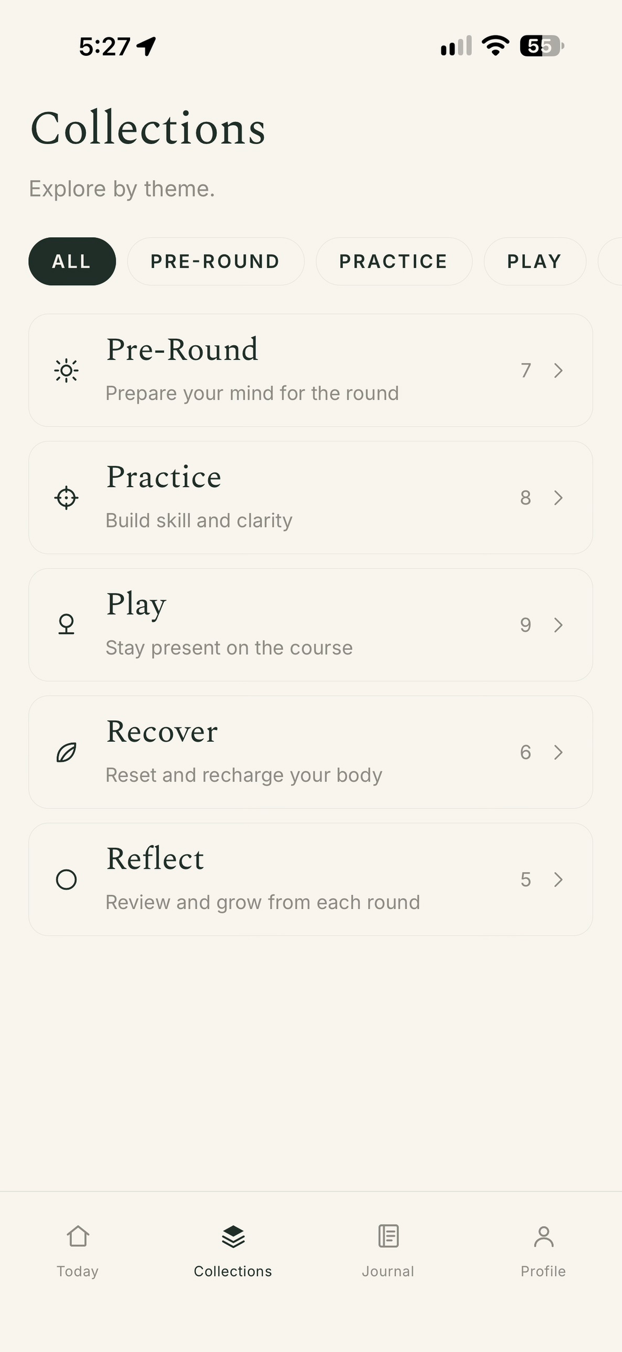
Pre-Round
Take a moment to arrive
Give yourself a few quiet minutes in the parking lot or on the walk to the range. Slow your breathing, notice how your body feels today, and choose one simple intention for the round, such as committing to every shot. Leave swing thoughts for the range.
Practice
Find space for purposeful practice
Instead of hitting ball after ball, rehearse your full routine on some shots, the way you would on the course. Pick a target every time. When your mind drifts to results, bring it back to the process.
Play
Come back to the shot in front of you
Between shots, let your attention widen to the walk, the course and your playing partners. Narrow it again only as you reach your ball. One shot at a time sounds simple. The skill is returning to it after your mind wanders, which it will.
Recover
Make room to rest and reset
After a tough hole, or at the turn, take one slow breath before you judge anything. When the round ends, give your body and mind a few minutes to settle before you replay any shots.
Reflect
Notice what stays with you
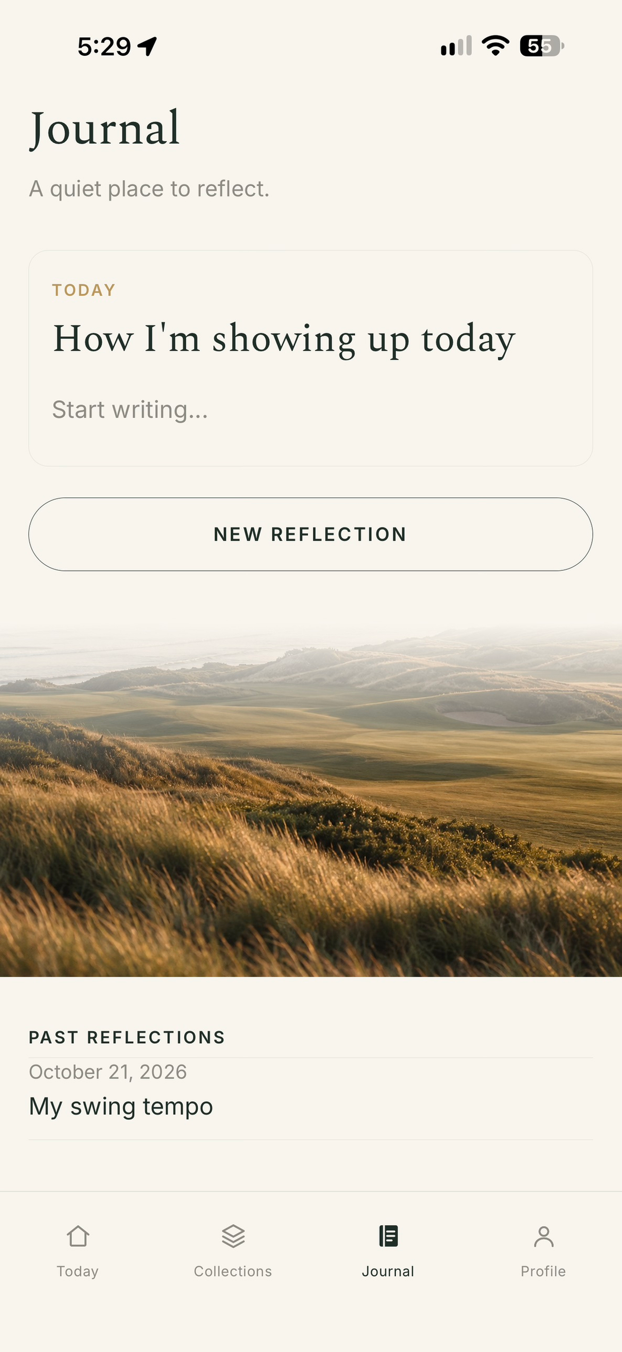
Write a few lines: when you felt most present, what pulled you away, and one thing to carry into your next round. Keep it about attention and feeling, not only numbers.
A simple reset between shots
Most of a round happens between shots. This short routine gives that time a shape, so each shot starts fresh. Try it on the range first, then take it to the course.
Let the last shot go
Allow yourself a short reaction, good or bad, then let it end. Some golfers use a small physical cue, like fastening their glove, to mark the moment.
Widen your attention on the walk
Look around. Notice the course, your breathing, the conversation. You can't concentrate hard for a whole round, and you don't need to.
Breathe before you decide
As you reach your ball, take one slow breath. Then read the lie, the wind and the target.
Commit, then swing
Choose your club and your shot, and commit to it. Save second thoughts for the walk to your next shot.
Common mental traps,
and what to try instead
Every golfer falls into these. The fix is rarely more effort. It is usually a small change in where your attention goes.
| The trap | Try instead |
|---|---|
| Replaying the last bad shot | Give it a short reaction, use your reset cue, and turn to the next shot. |
| Adding up your score mid-round | Bring your attention back to the current shot. The card will still be there at the end. |
| First-tee nerves | Arrive with time to spare, breathe slowly, and pick a club and target you trust. |
| Too many swing thoughts | Keep technique for the range. On the course, choose one target and one feel. |
| Rushing after a mistake | Slow your walk and your breathing before you play again. |
| Judging the round on the drive home | Write a few lines first: what went well, what pulled you away, what to try next time. |
Guided audio for each
moment of the round
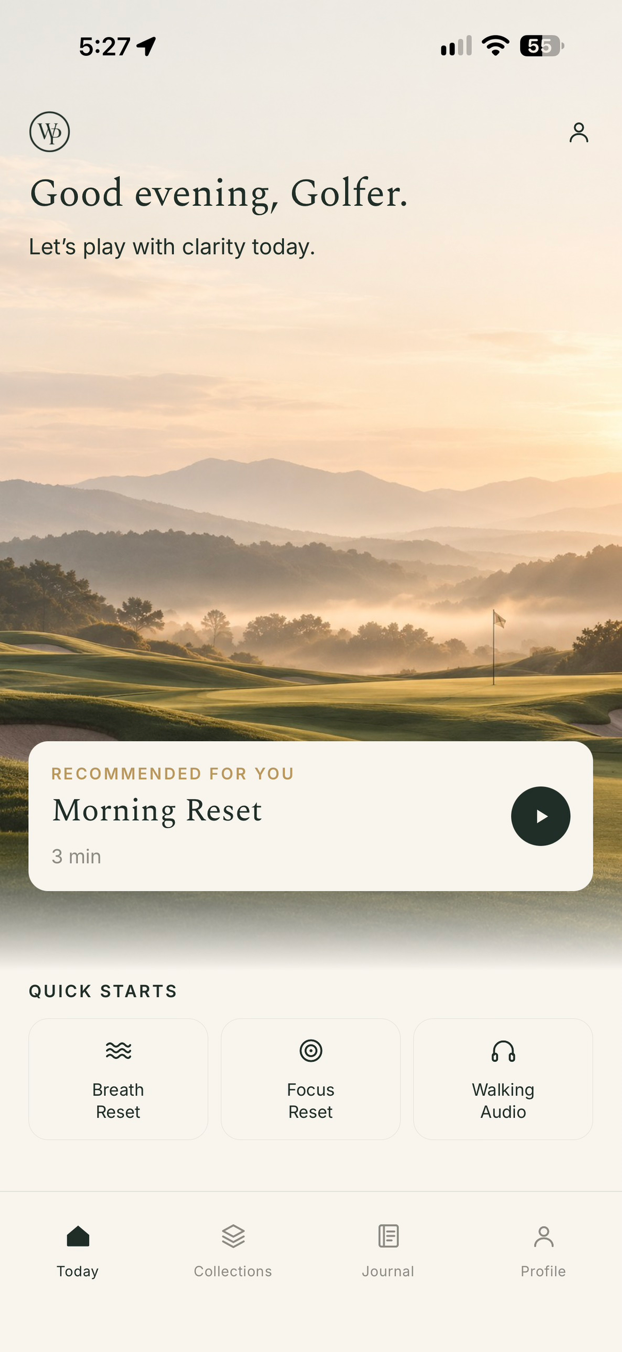
Within Par is a considered collection of guided experiences for golfers, built around the same five moments: Pre-Round, Practice, Play, Recover and Reflect. No swing analysis. No scorekeeping.
Questions golfers ask
What is the mental game of golf?
The mental game of golf is how you manage your attention, nerves and reactions during a round. It covers how you prepare before the first tee, how you reset between shots, and how you reflect afterward.
How can I improve my mental game in golf?
Practice it in small, repeatable ways. Arrive a few minutes early to settle, use the same short routine before every shot, let each shot end before the next one begins, and write a few honest notes after the round. Small habits practiced often work better than big resolutions.
How do I stop overthinking on the golf course?
Give your thinking a place and a time. Do your deciding as you reach the ball, then commit and swing with one target in mind. Between shots, widen your attention to your surroundings instead of replaying the last swing. Keep technical thoughts for the range.
How do I calm first-tee nerves?
Nerves on the first tee are normal, and you don't need to get rid of them. Arrive with time to spare, take a few slow breaths, and choose a club and target you trust. Focus on committing to the shot rather than on how it looks.
Does Within Par track my score or analyze my swing?
No. Within Par has no scorekeeping and no swing analysis. It is guided audio for the moments before, during and after a round, plus a private Journal on your iPhone.
Can I listen to Within Par while I play?
Yes. Sessions play in the background, so you can listen before you tee off, on the walk between shots in a casual round, at the turn or afterward. If you're playing in a competition, check its rules on using audio during a round.
How much does Within Par cost?
Morning Reset is free. The full collection is part of a Within Par membership, available monthly or annually, and eligible new members get a free period. Current prices are in the Membership section of our homepage.
Play with
clarity.
Start with Morning Reset, a free guided experience, and take a little space to arrive before your next round.
Download for iPhone